What 20 years of yoga taught me about learning English
What 20 Years of Yoga Taught Me About Learning English
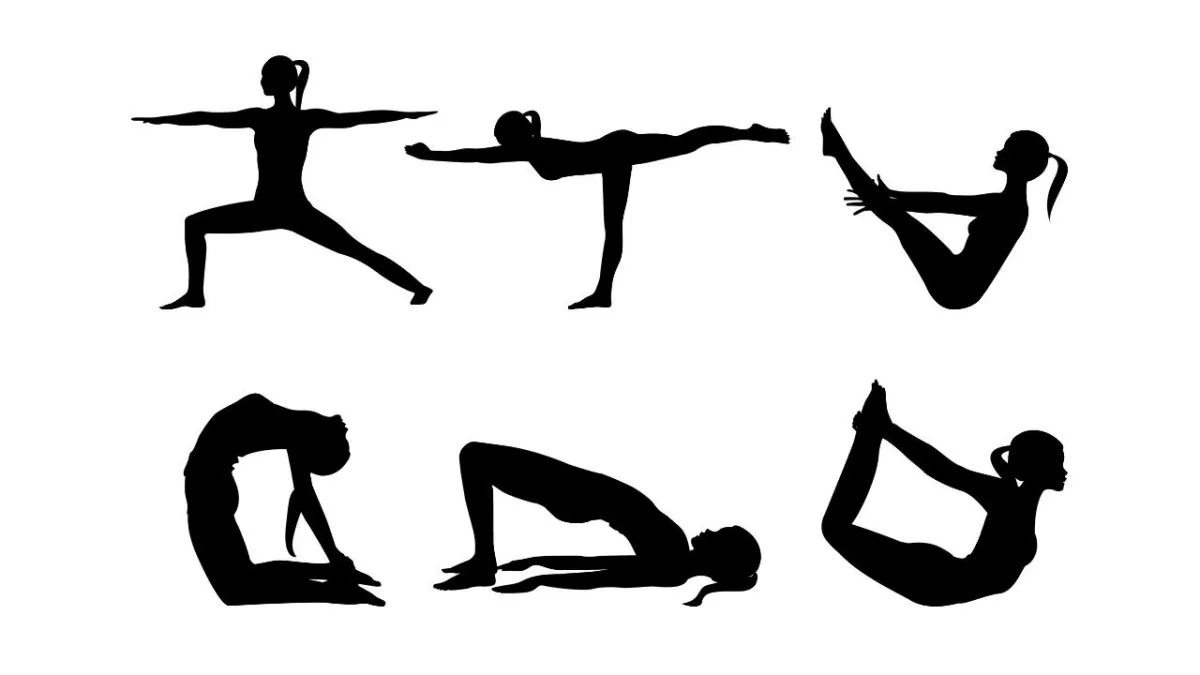
I’ve been practicing yoga for about 20 years.
And let me tell you something: I am still very far from being able to do all those beautiful, impossible-looking yoga poses you see on Instagram.
There are days when I feel I am flying on the mat.
And then there are days when my body feels like a piece of wood.
I feel rusty. I wobble. I lose my balance. I can't get into a position that I managed perfectly well the week before.
My yoga teachers always said: "What the body gives today!"
So I keep going back.
And I realized something a while back:
This is exactly how learning English should work, too.
Not because yoga and English are remotely the same thing.
But because practicing yoga has taught me two things that are incredibly important when you're trying to improve at anything:
Consistency matters more than perfection.
And:
A bad day doesn't mean you've stopped making progress.
And I think these are two things many English learners struggle with.
You don't need to be perfect. You need to keep showing up.
One of the things I love about yoga is that there is no point at which you can say:
"OK, I've finished yoga. I'm done now."
After 20 years, I still practice.
There is always something to improve.
A little more balance.
A little more strength.
A little more awareness.
A little more control.
And sometimes, simply getting through the practice is enough.
This is very different from the way many people approach English.
They start learning with a goal:
"I want to speak English fluently."
So they study.
They learn vocabulary.
They do grammar exercises.
They take a course.
They watch videos.
They practice for a while.
And then life gets busy.
They stop.
A few months later, they decide they really need to improve their English, so they start again.
And then they stop again.
And so the cycle continues.
Start.
Stop.
Start again.
Feel guilty.
Try harder.
Stop.
Start again.
The problem isn't necessarily that they don't know how to learn English.
The problem is that they're treating English like something they need to finish, rather than something they need to practice.
But language doesn't really work that way.
You don't "finish" English.
Just like I don't finish yoga.
You keep developing it.
And the secret isn't necessarily doing a huge amount.
It's coming back.
Even when you don't feel like it.
Even when you're tired.
Even when you're busy.
Even when your English doesn't feel particularly impressive that day.
But consistency doesn't mean being perfect every day
This is where I think we often misunderstand the word consistency.
Consistency doesn't mean:
"I must practice English for one hour every single day, otherwise I've failed."
That's not consistency.
That's setting yourself up for guilt.
Real consistency is much less glamorous.
It's doing something small and manageable and then doing it again.
And again.
And again.
Some days you have an hour.
Some days you have 15 minutes.
Some days you might only listen to something in English while you're driving.
That's OK.
The important thing is that English remains part of your life.
Because every time you come back to it, you're strengthening the connection between what you know and what you can actually access.
And that brings me to the second thing yoga has taught me.
Some days you're just not very good at it
This is probably my favorite lesson.
Because after 20 years of yoga, I have learned that I cannot judge my entire yoga practice based on one bad session.
Some days my body cooperates.
Some days it absolutely does not.
Some days I feel balanced and strong.
Other days I am wobbling around like I've never done yoga before.
And you know what?
I don't panic.
I don't go home and think:
"That's it. Clearly I can't do yoga."
I don't throw my yoga mat in the bin.
I just come back the next time.
Because I understand something very important:
Performance fluctuates.
And your English does too.
You can have a fantastic conversation in English on Monday.
You're relaxed.
The words come easily.
You tell a story.
You make jokes.
You understand everything.
You leave the conversation thinking:
"Wow! My English is actually really good!"
And then on Wednesday, somebody asks you a simple question and suddenly...
Nothing.
Your brain goes:
404 – English not found.
You know the word.
You've used the word before.
You could probably write it down.
But in that moment, it's just... gone.
And then you start questioning yourself.
"Why couldn't I remember that?"
"Maybe my English isn't as good as I thought."
"Maybe I'm not fluent after all."
But here's the thing:
One difficult conversation doesn't erase everything you know.
Just like one bad yoga session doesn't erase 20 years of practice.
Practice is not performance
I think this is one of the biggest mindset shifts English learners need to make.
Practice is not performance.
When I'm practicing yoga, I'm not performing for the person on the mat next to me.
I'm not being graded.
I'm not expected to execute every position perfectly.
I'm practicing.
And the same should be true when you're practicing English.
If you make mistakes, that's not evidence that you're bad at English.
If you forget a word, that doesn't mean you haven't learned it.
If you hesitate, that's not proof that you've made no progress.
And if your English feels worse today than it did last week, that doesn't necessarily mean you've gone backwards.
It means you're human.
Your energy changes.
Your concentration changes.
Your confidence changes.
Your environment changes.
And your performance changes with it.
The goal isn't to perform perfectly every time.
The goal is to become more comfortable with the process.
What if you stopped judging yourself by your worst English day?
Think about this for a moment.
What if you stopped using your most difficult English moments as evidence of how good or bad your English is?
What if instead you looked at the bigger picture?
Maybe six months ago, you couldn't participate in a meeting without preparing every sentence in advance.
Now you can.
Maybe you used to avoid small talk.
Now you can manage a few minutes of conversation.
Maybe you used to panic when somebody asked you a question unexpectedly.
Now you still freeze sometimes, but you recover more quickly.
That's progress.
It might not look dramatic.
It might not feel like a breakthrough.
But it's progress.
And perhaps that's another thing yoga has taught me:
Progress isn't always visible while you're in the middle of it.
Sometimes you only notice it when you look back.
So what does this have to do with your English?
Maybe more than you think.
If you've been trying to improve your English for years and you're frustrated that you're "still not fluent," perhaps it's worth asking yourself a different set of questions.
Not:
"What's wrong with my English?"
But:
Am I practicing consistently?
Am I giving myself enough opportunities to actually speak?
Do I expect myself to perform perfectly every time I open my mouth?
What happens when I have a bad English day?
Do you see it as failure?
Or do you see it as simply... another day of practice?
Because maybe you don't need another grammar book.
Maybe you don't need another 500 vocabulary words.
Maybe you don't need to wait until your English is "good enough" before you start speaking.
Maybe what you need is to start treating English less like a subject you have to master...
And more like a practice you return to.
Again and again.
With patience.
With consistency.
And with a little more kindness towards yourself.
Because after 20 years of yoga, I still wobble.
I still have days when things don't work.
I still have plenty of poses that make me wonder whether my body received the memo.
And that's OK.
I'm still practicing.
And maybe that's the point.
You don't have to be perfect to be progressing.
You just have to keep coming back.
And if your biggest problem isn't knowing English, but actually accessing it when you need it...
If you understand English but sometimes go blank, freeze, hesitate, or suddenly can't find the words you know are somewhere in your brain, I've created something specifically to help with that.
The Unfreeze Method will help you understand why this happens and give you practical tools to get your English moving again when your mind goes blank.
